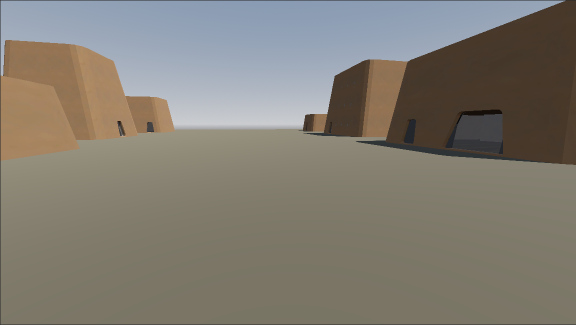
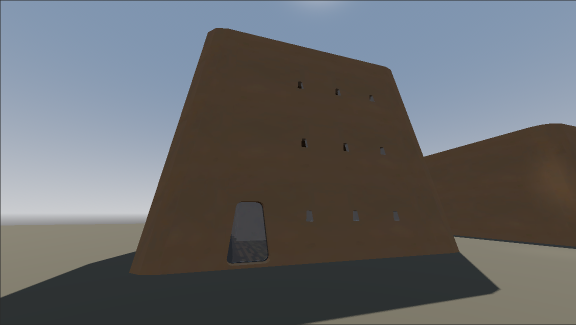
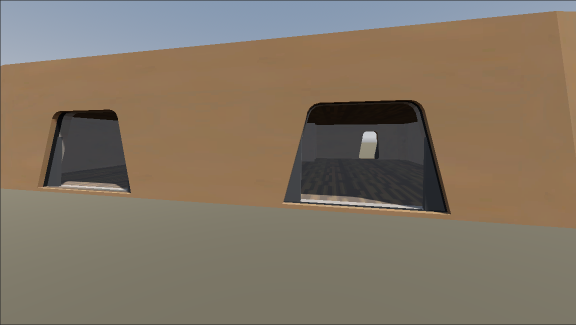
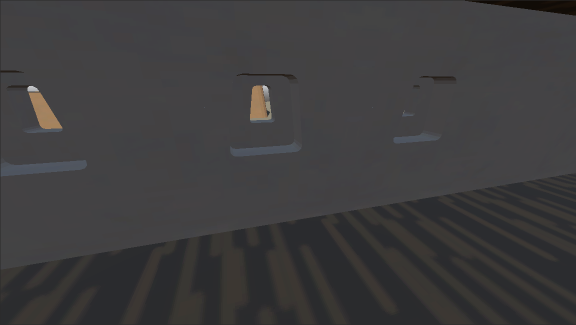
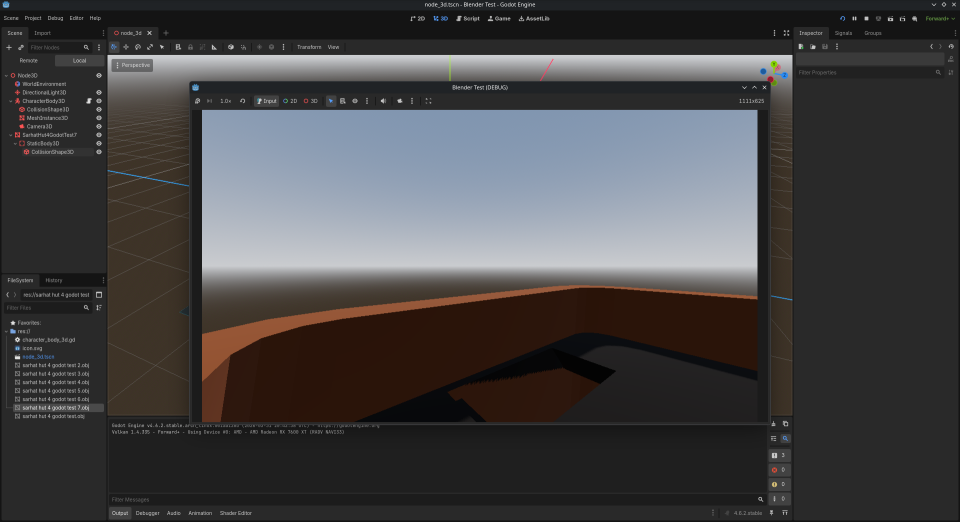
Things have been going very well for the past weeks, with progress on developing my 3D modeling, texture painting, and rigging skills going much faster than I ever anticipated. I am planning to keep focusing on improving my texturing and animating skills, developing an art style, and putting together a basic assets library for the time being. But as things are going now, I think there’s a good chance I might actually start moving on to learning game programming in Godot before next year.
As part of figuring out an appropriate, consistent, and practical art style, I’ve also been thinking again about the overall approach to storytelling, NPC interactions, and gameplay mechanics over the last weekend. These do have some real consequences on how the game world will need be constructed and what kind of expressions NPC models will need to be capable of. Working out game mechanics and a general style of level geometry first and then creating assets according to the needs that arise would probably be the smarter approach in most situations. But with how much I’m putting on my plate with all of this, I feel that mastering Blender first before moving on to Godot instead of doing both in parallel will be a lot more sustainable for me. It could mean that I might have do redo a good amount of assets as gameplay changes during development. But having at least a solid plan now for how players are intended to move through the game world and interact with it should help with reducing the amount of asset work that will have to be redone.
While researching 3D games from the mid 90s and recent indie games with a similar Raw 3D look as references for an Iridium Moons art style, I became aware of Compound Fracture, a game greatly inspired by Dino Crisis. But other than two trailers that look very nice and impressive, there really is very little information on that game. And as it turns out, the first trailer came out almost 5 years ago now. Is it actually going to come out one day? Hard to say, but by now it seems quite unlikely.
This had me check up on some other 90s styles scifi action games I’ve been very impressed by some time ago. Beta Decay had it’s first gameplay trailer 3 years ago. Selaco over 5 years ago. And Peripeteia 6 years ago. Peripetia had a playable build on Steam 1 year ago, and Selaco 2 years ago. And none of these games have a release date yet. That at least one of these four games will be finished eventually is probably almost certain. That two of them will get a full release is quite possible. But three? That seems doubtful. And all four? I really don’t think so. Grainy low-fidelity sci-fi games that exist on the intersection between action, ImSims, and Survival Horror have been a very popular idea that get people very excited for many years now. And getting something that looks really good and fun in trailers seems to be fairly easy. But the track record for such games actually getting finished has been terrible so far. And these are all from people who have way more qualifications and resources than I’ll ever going to have.
Back in the 90s and early 2000s, it wasn’t uncommon for popular games to have their follow up being released only one year later. Thief II, FreeSpace 2, Fallout 2, and Knights of the Old Republic II, all come to mind. Though many people at the time thought that it would have been much better if the games had been given another half or full year of development instead of rushing them out like that, it was possible to create beloved classics like that by essentially being just new levels for the same game with no meaningful changes to the engine or gameplay. Game development for mainstream, big budget titles has gotten longer ever since because developers wanted to appeal to new customers who weren’t already hooked by the gameplay of older similar games or the story of earlier games in a series by impressing with more advanced graphics, more spectacular game mechanics and physics, and more size. Simply making another campaign for a game that already exists was not really a commercial option for them, and still isn’t.
But for small indie developers that are targeting the retro-style market, I think this is exactly what the target audience is looking for. A bit more polish, a bit less jank, and taking some lessons from interface and controls evolution would be greatly welcome. But I think a game that has game mechanics that are basically identical to standards from 30 years ago is absolutely viable. Maybe add two or three small innovations to give the game an individual personality, but I think we really don’t need to have 2020s games with low-fidelity graphics as purely an aesthetic gimmick. Every developer and team is free to give it a shot, but I know it definitely is not an option for me. I made the decision to go with a Raw 3D aesthetic for Iridium Moons entirely because this is one way I can make a game look visually appealing while keeping the technical skill required to an absolute minimum.
The overall framework I settled on last week is to aim for a game that could pass as an asst flipped, knockoff-Star Wars themed, total conversion mod of Deus Ex with the sneaking and visibility mechanic of Thief. That’s it. Nothing more.
Actually less even, as I think character customization for different playstyles is better done by selecting your equipment loadout instead of assigning upgrade points to different skills.
Since I am much more interested in stealth and investigation gameplay and environment design and not really into the idea of writing big stories and complex characters, I think it can also be made very episodic. Instead of structuring the overall story like a 2000 page novel series, I see Iridium Moons more like 2 hour adventure movies with their own beginning and end that take place in the same universe and revolve around the same protagonists. This should allow me to get at least something out the door that players can play after 4 or 5 years of development. And if I still have more in me, I perhaps could continue with another episode over the next 2 or 3 years, and keep doing that until I get tired of it. Which seems much more feasible to me than aiming straight for a complete 40 hour game in 10 different locations that gets canceled after 12 years of development with no end in sight.