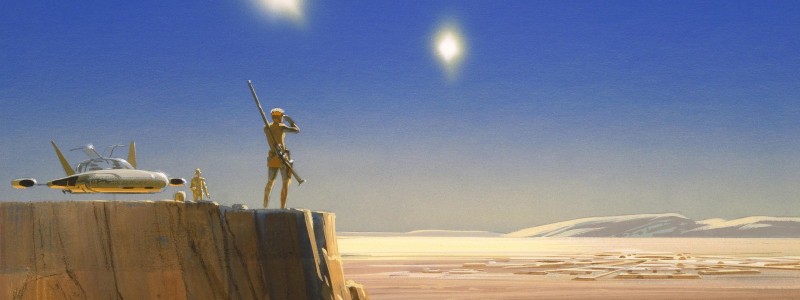
The Worlds of Iridium Moons and the Galia Cluster

The first general outlines of what would become the Iridium Moons setting go back to 2021, with a major revision to make it better align with my ideas for a videogame happening about a year ago. Much about the world are still vague or undefined, and I plan to keep making adjustments for what works best with the gameplay and story as they develop. But there are many parts about it that now have been pretty much unchanged in my imagination for years, and become so integral to the overall vision of what Iridium Moons is that I very much doubt they will see any significant changes as things progress, and I feel are very much ready to share even at this early point.

General Overview

The world of Iridium Moons is set in a typical spiral galaxy similar to our own, with a billion stars and tens of billions of planets. The space known to by the peoples of Iridium Moons is only a small fraction of the entire galaxy, consisting of a section of one of the spiral arms a few thousand lightyears across. Most of the stars in Known Space have never been visited and their planets remain completely unexplored, as exploration expeditions are only outfitted and launched to systems that have been found to be of scientific or economic interest through astronomic observations from inhabited worlds or colonized planets. But even so, there are hundreds of known planets that have evolved complex life, many of which have a stable nitrogen-oxygen atmosphere that is breathable to most peoples.

A good number of them even have intelligent life capable of speech and using tools, but many of them are primitive stone age peoples that only number a few million individuals at the most. And while these could potentially be raised and educated to learn the languages and using the technologies of spacefaring civilizations, most governments have clear policies to simply leave them alone, and they usually have nothing to offer that would be of any interest to the interstellar powers. In the centuries since the invention of hyperspace jump drives, only a dozen worlds have been discovered whose people number in the billions and who have developed industrial economies.

While the technology of hyperspace travel makes it possible to cross all of Known Space within a year, the large scale colonization of new planets is a relatively rare occurrence. Planets with a breathable and nontoxic atmosphere are not particularly rare, but it’s almost impossible to find another world that also matches the gravity, atmospheric pressure, and solar radiation of a species homeworld. Which makes prolonged visits to new worlds an often quite uncomfortable experience for most people. And for the first several decades after the establishment of a new outpost, settlements will be lacking in most infrastructure and have only very restricted access to most goods and amenities that are easily available on the homeworlds. As a result, other than the occasional adventurous individuals seeking a new excited life among the stars, most people require a very good reason to endure the weeks long journeys and years of hardship of establishing new colonies on uninhabited worlds. Which typically is exceptionally high pay.

Advanced technology, particularly in the fields of starships, weapons, and electronics, require vast quantities of elements that, while not overly rare, are very difficult and time consuming to extract from most naturally occuring sources. And as such very expensive. But mining companies throughout Known Space have discovered that with the relatively low operating costs of space freighters, and the associated transportation costs for interstellar goods, it is economically more viable to transport heavy mining equipment and workers across hundreds of lightyears to a one in a million planet where certain high value elements can be mined with much less work than on any of the planets and moons of the home systems. Almost all interstellar space travel within Known Space is either heavy cargo ships transporting minerals and supplies between mining worlds and the home systems or military ships ensuring that the cargo traffic is not being disrupted.

Early Interstellar History

Interstellar history begins with the first hyperspace jump by vhen engineers over 700 years ago. The first centuries of interstellar flight were driven entirely by the exploration of space and the search of other civilizations. The enkai were the first other people discovered by the vhen after almost a hundred years, as their highly advanced technology and industry made them easily detectable by vhen exploration ships from hundreds of lightyears away. The enkai were in many ways more technologically advanced than the vhen, but had never discovered the mechanics of hyperspace travel. Through the exchange of technology between the two civilizations, the continuing exploration of space and the development of the early interstellar mining industry accelerated rapidly. Both peoples discovered several more planets with existing industrialized planetary economies that could be integrated into the growing galactic economy, and the vhen and enkai homeworlds became the centers and seats of power for what would later become the United Systems and the Confederated Worlds.

With the technological development of these worlds being often significantly lower, and large parts of the populations being affected by economic hardship, they provided a vast new source of eager workers for the great mining companies, as they could make more money in a year on a mining world than they would make on their homeworlds in a lifetime. Over the span of barely a century, chosa and tubaki became the majority of the workforce in all the major mining companies, with enkai and particularly vhen remaining in significant numbers only in administration and management positions. A similar development would happen again later with the discovery of the genya homeworld.

The Galia Cluster

The Galia Cluster is a group of star systems on the outer edge of the spiral arm that contains Known Space. It was first explored almost three centuries ago and found to have unusually high amounts of iridium, palladium, and rhenium on the surfaces of many of the stars’ planets. The first mines were opened on Halon shortly after, where several meteor impact craters promised very high extraction yields, and the meager remnants of a once thriving ecosystem had maintained an atmosphere that allowed working in the open with simple breathing masks. But to provide food for the hundreds of thousands of workers employed on the planet, additional farming colonies had to be established on the lush forest planet Kion, which allowed the growing of food using natural sunlight and rainwater and was only 13 lightyears away.

Less than 50 years after mining on Halon had started, and the initial mining sites were approaching depletion, mining companies were already preparing to shift operations to Sarhat. While not as rich in valuable minerals, the dry steppes of Sarhat made large scale strip mining much more straightforward, and the access to local water sources and an atmosphere that didn’t require breathing equipment and sealed habitats made the labor costs significantly cheaper. With Sarhat and Kion being expected to continue the mining operations and food production for at least another century, a full size shipyard and large fuel refinery were constructed on Palan, which became the main port and center for manufacturing and administration for the entire Galia Cluster. Soon after, most of the remaining mines on Halon were closed and their workers transfered to Sarhat, with much of the old and worn out equipment being left abandoned. Some of the long-time miners on Halon chose to stay behind to keep working mineshafts that they believed to still hold enough ores to make them personally rich, even if the companies thought it not worth their time to continue operations there. Very few of them had any success, and the abandoned mines of Halon quickly became the main hiding place for pirates and smugglers operating in the Galia Cluster.

The profitability of the great mines on Sarhat, and the smaller mining operations in a few places on Kion and Palan, declined sharply some 150, when new large sources for high value mineral where discovered in other regions of Known Space. Mines were being closed every few years, and millions of workers leaving the planets to follow where the work went. Over the span of a few decades, the mining companies, who had build and was maintaining the entire infrastructure of the colonies, sold off all their remaining assets for cheap to whoever would buy them. The wealthy upper class of the Galia Cluster had always been company managers who were now looking forward to return to the homeworlds to retire or soon to be assigned to new positions on the new mining worlds. The only true locals who had large amounts of money were criminals who had gotten rich through smuggling and piracy and they bought almost all the remaining infrastructure and major factories, often resorting to extortion to prevent competitors to drive up prices. These became the first oligarchs of the Galia Cluster, and they used their almost complete control over the economy to create a new system that was even more unequal and exploitative than it had been under company management. Which resulted in further migration from the region, reducing the original population of almost 100 million people to barely more than 60 million over the course of just one generation. Even when the companies were still winding down their businesses and selling off their last assets, the new oligarchs were already starting to build themselves big palaces and styling themselves as wealthy aristocrats, sometimes even giving themselves new fancy titles.

Life has changed very little in the Galia Cluster over the last century. The oligarch clans own and control all the infrastructure in the main cities, as well as all the spaceports, refineries, and factories. Many of the clans also run several mines, but these are much smaller operations than what used to be common for the old mining companies. A large amount of the mining that still continues on Sarhat is done in small family mines of a few dozen to a hundred workers, who sell their ores to the oligarch’s refineries for extortion prices. On Kion, many families that stayed eventually turned to farming for their own needs in small independent villages scattered throughout the forests. What meager surplus they can produce gets often sold to oligarch traders who export it to Palan and Sarhat. This income is mostly spend on medical supplies and basic electronic devices. Old farming machines are carefully maintained to last for as long as possible, but after more than a century, many smaller farms have been moving increasingly rely on work animals and hand tools to work their fields.

Most violent conflict is happening between rival oligarch clans, which each maintain their own private militias, but generally try to at least maintain a pretense of peace and unity between themselves. Instead of attacking each other’s businesses directly, they rely heavily on criminal gangs to do their business for them.

Worldbuilding Ground Rules

One of the major annoyances and frequent nuisance of flawed worldbuikding is the introduction of new rules for what non-realistic things are possible in a setting that contradict things that have already been established at an earlier point, or whose existence should have significantly changed how characters behaved in previous scenes. This is most commonly a problem with long running series that have dozens of writers and nobody checking scripts for such inconsistencies. But it also happens frequently to series written entirely by a single writer, and then it is particularly annoying and distracting.

The proper way to prevent this from happening with a fantastical setting is to establish the rules for how the non-realistic aspects of the world work before creating the plots that will revolve around them. The audience or even the characters don’t have to know all the rules from the start. But the writers need to create clarity for themselves what things are possible or not in their world, so they don’t retroactively invalidate the resolution of earlier moments in the story. This does not just apply to technologies or magic spells, but can also include social pressures and power balances that will likely affect how different characters can act in various conflict situations and get away with it.

All of the things shared here are information that is openly known to well informed people in the Galia Cluster, and available to any player characters.

Space Travel

  • Ships move faster than light by moving through hyperspace, where the speed of light is much higher and acceleration requires much less energy.
  • Ships in hyperspace are completely isolated from any signals and are undetectable and unable to communicate.
  • Hyperspace is still influenced by the gravity of any objects with mass. Hyperspace jump drives must overcome the gravitational force between the ship any other objects, which requires keeping a minimum distance from planets and stars.
    • Military ships (and pirates) tend to have more powerful jump drives that work relatively close to planets. Commercial cargo ships have much more cost efficient drives that require a greater distance from planets to work. This makes it possible to intercept cargo ships in the hours before landing and after takeoff.
  • Travel times to the next inhabited planet can often be over a week. Travel between the homeworlds and outlying colonies can range from weeks to months, and crossing all of known space on commercial ships can take more than a year on slower ships and indirect routes.

Space Settlement

  • Most people never leave their own planet.
  • Over 90% of all people live on the homeworlds and a small number of major colonies over 100 million people. The majority of inhabited planets has only a few million people or less.
  • Societies capable to migrate to other star systems tend to have very high living standards and very little population growth, making it actually difficult to find people interested in settling new remote planets. People usually accept a lack of existing infrastructure and limited access to most goods if they are paid very well to work in newly established outposts.
  • Space colonization is driven almost by the mining industry. While almost all elements and minerals can be found in huge quantities in most star systems, space travel is cheap enough to make it the most cost efficient for companies to only extract the most easily and cheaply accessible resources on a planet and then move on after a few decades.

Weapons and Combat

  • No laser or plasma weapons.
  • No force fields.
  • Starships almost never explode from combat damage. Instead, battles generally end when a ship loses the ability to continue firing or maneuvering, or loses all power. When losing a battle, crews will usually abandon disabled ships to become prisoners, and blow up their ships themselves to prevent them being salvaged by the enemy.
  • Interstellar warfare consists almost exclusively of interfering with trade by capturing enemy cargo ships, and attacking enemy cruisers and starship bases that can protect commercial ships against attacks.
  • Major interstellar powers do not compete over natural resources, which are abundant everywhere, but over trade of manufactured goods. Planets are of strategic importance because their location and infrastructure allows the stationing of ships that can protect or interfere with trade, or more rarely because of the manufacturing capacity of the local industry for certain critical goods.
  • Planetary invasions of homeworlds and major colonies are almost unheard of, as the costs of transporting and supplying armies large enough to conquer and occupy a planet with a populations of hundreds of millions of people are exponentially more expensive than maintaining ground forces to defend against such an attack.

Psychic Powers

  • Psychic phenomenons are caused by interactions between the psychic and the electromagnetic fields. Waves in either field create waves in the other field as well. The electrical signals in the nervous system of living creatures can cause waves in the psychic field, which then cause electromagnetic effects in the surrounding environment.
  • The interactions between the electromagnetic and the psychic field are usually very weak, making psychic phenomenons very faint and subtle and difficult to record and measure.
  • Interactions between the fields become greatly amplified in the presence of the mineral midorite.
    • All the known intelligent species evolved in regions of space where midorite is extremely rare. The reason for this remains unknown.
    • Because of the near complete lack of midorite in the home systems, where the vast majority of people lives and all the largest science institutions are located, psychic phenomenons remain relatively little researched, and reports of their potential power from remote mining worlds widely regarded as greatly exaggerated.
  • Most psychic phenomenons are produced by large groups of people being under prolonged severe stress in areas rich in midorite or heavily contaminated with midorite dust from ore refining. These mostly tend to produce sensations of lights, shapes, and sounds, electrical disruptions, and magnetic anomalies, but in some cases are reported to produce echo-like reflections of people and events that haunt the location.
  • Extensive mental training can give people the ability to deliberately produce directed psychic effects through their own brain activity. These psychic powers primarily allow a limited perception of other people’s thoughts and to affect the emotions and sensations of others. For some people, these insights into other peoples’ thinking allow them to make quite reliable predictions about their future actions and behavior, which some see as a form of premonition or divination.